Planning and positioning
patient-specific knee implants with precision
Compared with standard implants, patient-specific knee implants offer better long-term care, yet they often fail to reach clinical practice because of the high costs of design and manufacturing. OptiKnee addresses precisely this problem: through automation and computer-assisted methods, it significantly reduces the time-consuming and costly manual effort involved in designing and manufacturing individualized cutting and drilling guides for knee implants.
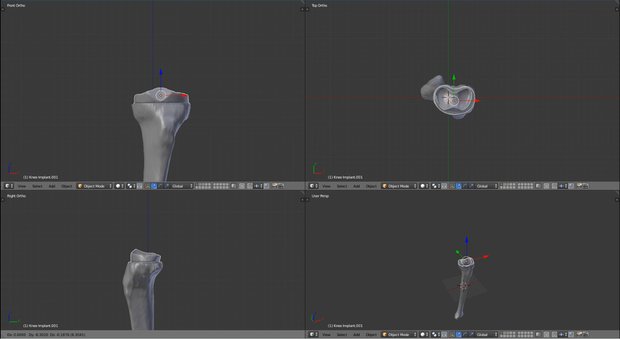
The key lies in the precise segmentation of bone structures from CT data and the automatic generation of custom-fit surgical guides. These take into account not only the patient's individual anatomy but also the specific features of the selected implant – enabling optimal positioning and a minimally invasive surgical technique.
The focus lies on developing a software-based expert system that supports surgeons in preoperative planning while at the same time reducing manufacturing costs. In this way, individualized medical technology becomes accessible for routine clinical use.
Challenges and solution approaches
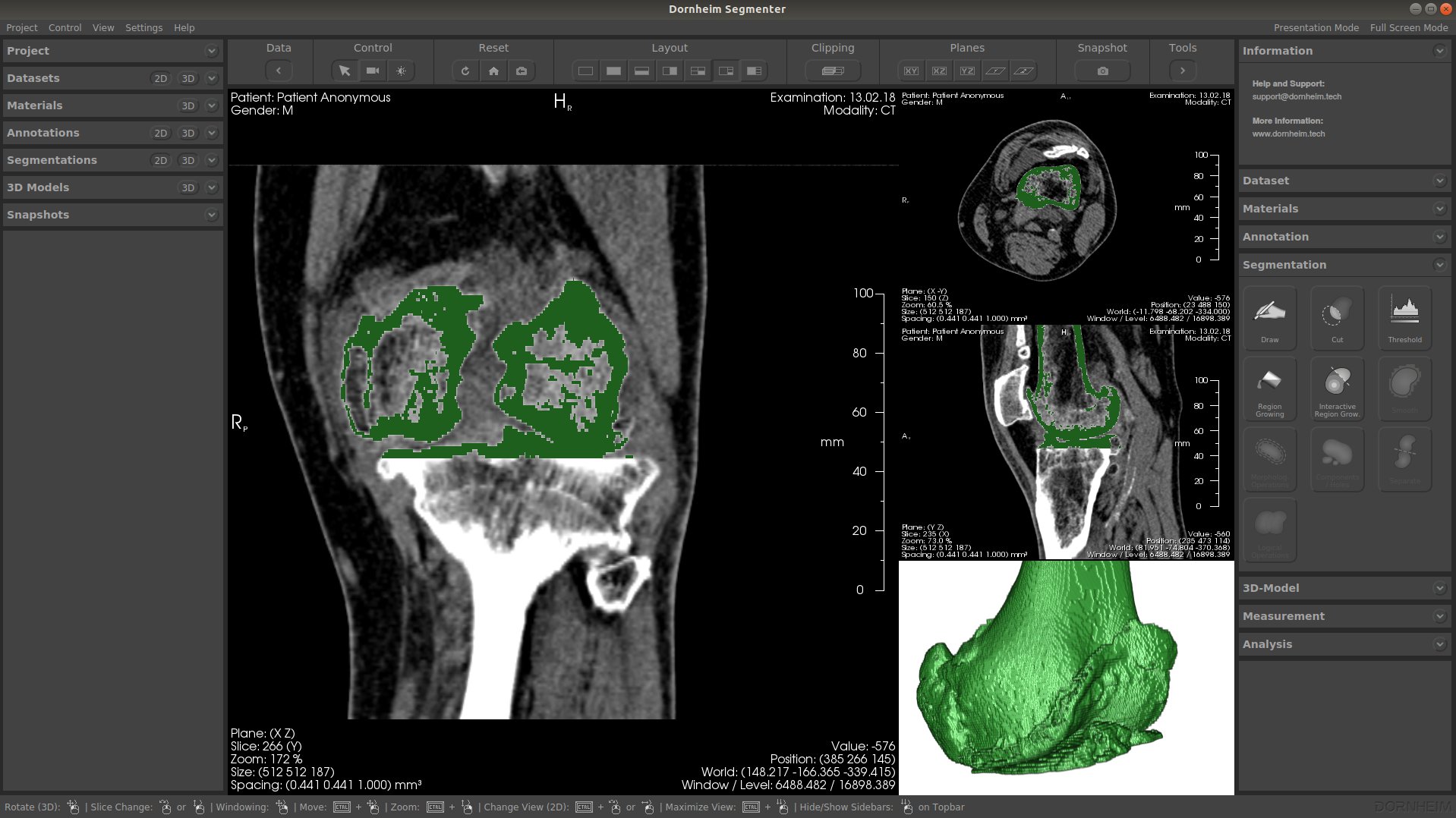
One of the greatest challenges in the project was the precise segmentation of the bone contact surfaces within the joint region. This is where the femur and tibia meet, often with only minimal intensity differences in the CT data, which makes automatic delineation difficult. Added to this are cartilage structures and pathological changes such as osteophytes, which are barely visible on standard CT scans.
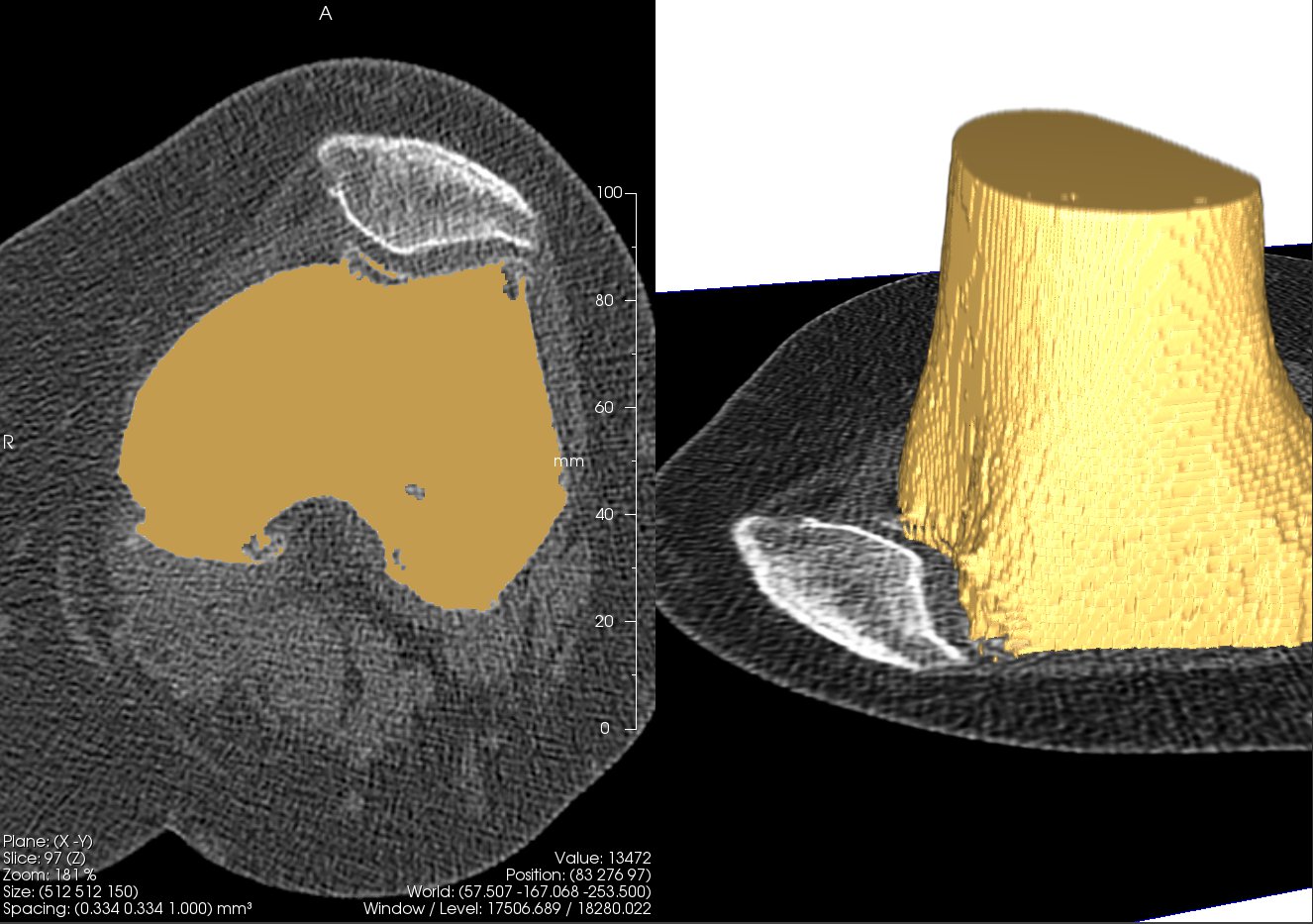
The OptiKnee team developed an innovative two-stage segmentation workflow: first, an idealized 3D model is generated for the outer implant dimensions, then a precise surface model for positioning the surgical guides. By combining several segmentation techniques (interactive region growing, morphological operations, and thresholding methods), the team created a robust process that delivers reliable results even with challenging image data.
A particularly successful approach was the deliberate reduction of the guides' contact surface: by focusing on the areas critical to positioning, uncertain segmentations are avoided while material and manufacturing costs are saved at the same time. This makes the surgical procedure more precise and less invasive.
The OptiKnee planning tool
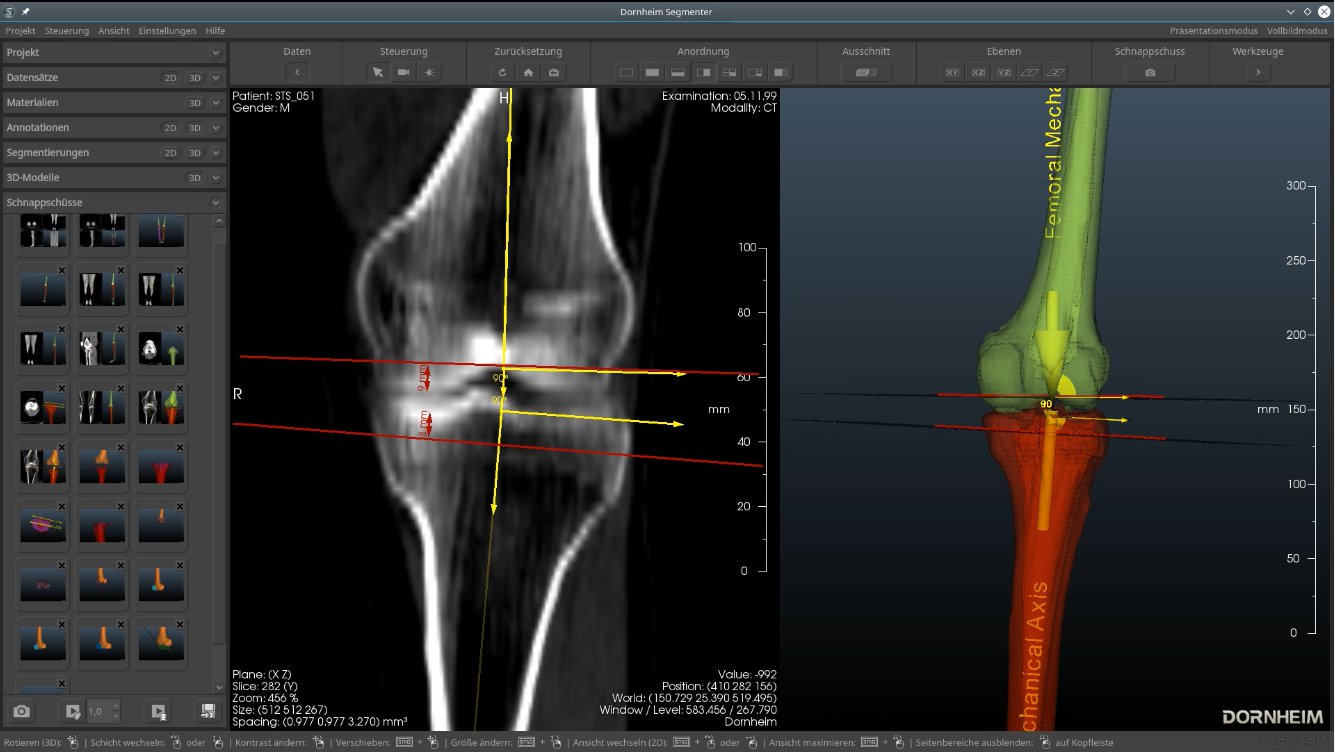
At the heart of the project is a prototype surgical planning tool that guides surgeons through the entire planning process. In the form of an interactive checklist, all relevant measurements and planning steps are worked through in the optimal sequence – from determining the axis and positioning the cutting surfaces to selecting the implant.
The tool offers a range of visualization options (2D and 3D), real-time measurements, and correction functions. Especially innovative is its dynamic adaptation to individual surgeon preferences: since every surgeon has different preferences for cutting-surface positions, the system allows flexible adjustments while at the same time providing default settings as a starting point.
A web-based version is planned for the future, enabling interdisciplinary collaboration among radiologists, surgeons, and manufacturing experts. Planning data can thus be transferred seamlessly from the operating room to additive manufacturing.
Contributions by Dornheim Medical Images
In the OptiKnee project, Dornheim Medical Images made significant contributions to image processing, 3D reconstruction, and interactive planning. The methods developed for the automated segmentation of bone structures from CT data enable, for the first time, the precise generation of the contact surfaces critical to positioning the surgical guides. Particularly innovative is the two-stage segmentation workflow, which combines an idealized model for the implant dimensions with a precise surface model for positioning the guides.
In addition, a prototype surgical planning tool was developed that guides surgeons through the entire planning process while allowing individual adjustments. The results feed directly into the ongoing development of the Dornheim Segmenter and are being made available as specialized modules for orthopedic planning.